
Fitting your Armour
How Medieval Armour Fits – A Practical Guide
Everything you need to know about choosing armour that looks incredible, feels comfortable and lets you enjoy every minute of your LARP adventure.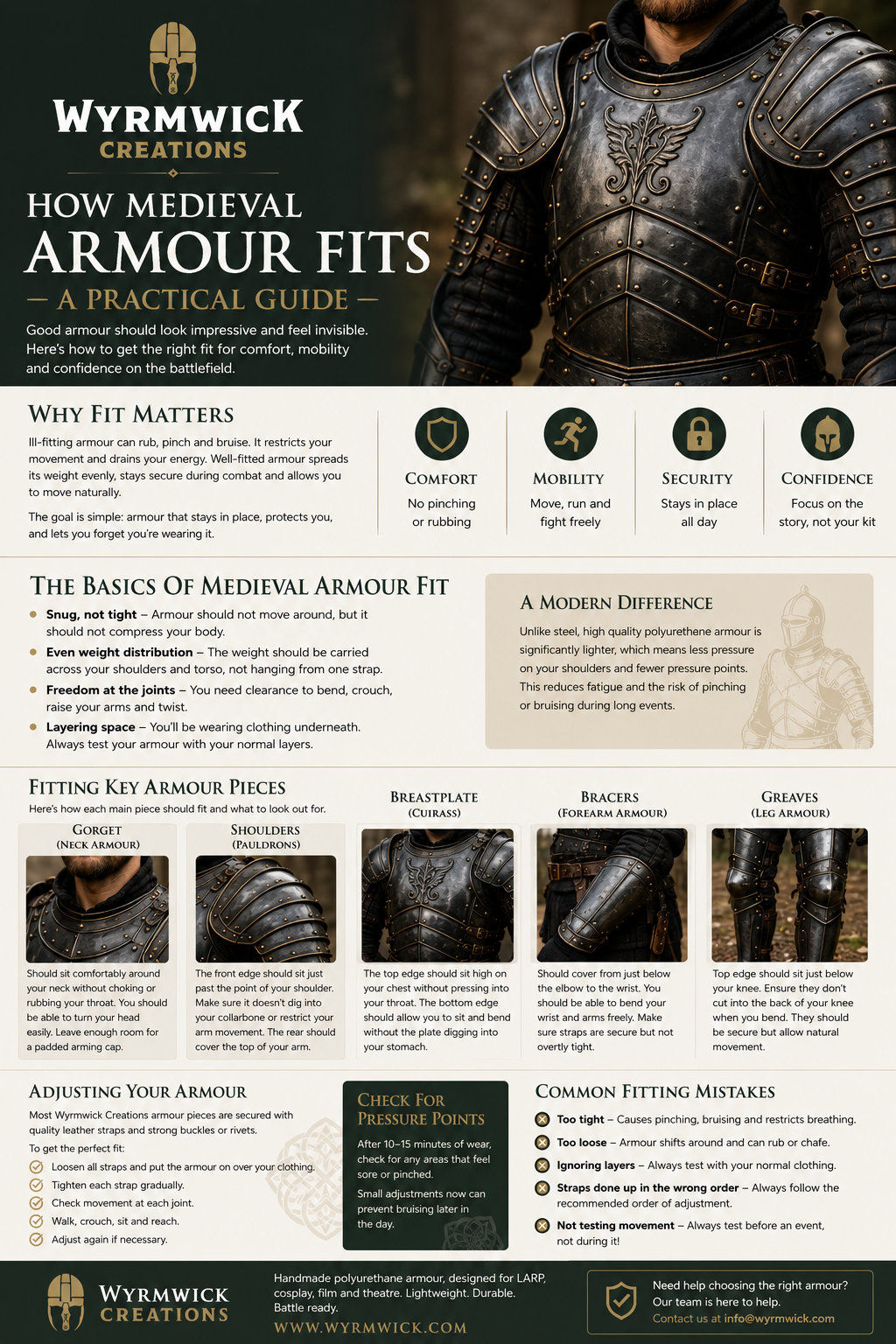
One of the biggest misconceptions about medieval armour is that it should feel heavy, restrictive and uncomfortable. In reality, well-designed armour should become almost unnoticeable after a few minutes. It should move with you, stay securely in place and allow you to focus on your character—not on aching shoulders or bruised collarbones.
Whether you're buying your first set of LARP armour or upgrading an existing kit, understanding how armour should fit will help you make a far better choice and avoid common mistakes that can spoil an event.
Why Proper Armour Fit Matters
No matter how impressive your armour looks, it won't be enjoyable to wear if it doesn't fit correctly.
Poorly fitting armour can:
- Pinch your skin when you move
- Cause bruising on your shoulders or collarbones
- Rub against your neck or elbows
- Shift during combat
- Restrict movement
- Become increasingly uncomfortable throughout the day
Good armour should do the opposite.
It should:
- Sit securely without feeling tight
- Spread its weight evenly
- Allow natural movement
- Stay in place during combat
- Be comfortable enough to wear all day
The best armour is the armour you forget you're wearing.
Medieval Armour Was Designed to Move
Hollywood often portrays knights clanking awkwardly across the battlefield, barely able to move.
The reality was very different.
Historical armourers spent centuries refining plate armour so that trained warriors could:
- Run
- Climb
- Fight
- Ride horses
- Kneel
- Mount ladders
- Draw weapons
The armour moved because each plate worked with the next.
Modern LARP armour follows the same principle.
Every piece should work together rather than fighting against your body.
Snug, Not Tight
One of the most common mistakes beginners make is tightening every strap as much as possible.
This usually creates pressure points rather than making the armour more secure.
Instead, your armour should feel:
✔ Secure
✔ Stable
✔ Comfortable
✔ Evenly supported
You should still be able to:
- Raise both arms
- Twist your body
- Sit comfortably
- Walk naturally
- Bend your knees
- Crouch
If any movement causes painful pressure or pinching, something needs adjusting.
The Hidden Problem with Steel Armour
Steel armour is beautiful, authentic and has an undeniable historical appeal.
However, there is something many first-time buyers don't discover until after their first event.
Fit is absolutely critical.
A professionally made, correctly fitted suit of steel armour can be remarkably comfortable.
Unfortunately, cheaper or poorly fitted steel armour often creates problems such as:
- Pinching at the shoulders
- Bruising on the collarbones
- Pressure on the hips
- Plates digging into the ribs
- Straps cutting into the shoulders
- Restricted arm movement
Because steel is heavy, every pressure point becomes more noticeable as the day goes on.
A slight pinch after ten minutes can become a painful bruise after eight hours of walking, fighting and wearing your kit.
This is one reason many experienced LARP players choose lightweight polyurethane armour. It provides the appearance of steel without placing the same load on your shoulders and joints, making it far more forgiving during long events.
Why Polyurethane Armour Is So Comfortable
At Wyrmwick Creations, we manufacture our armour from high-quality cast polyurethane because it offers one of the best combinations of realism and comfort available.
Compared with traditional steel armour, polyurethane offers several advantages:
- Much lighter weight
- Less fatigue over long events
- Reduced pressure on shoulders and collarbones
- Lower risk of pinching or bruising
- Greater freedom of movement
- No rust or corrosion
- Easy maintenance
The result is armour that looks impressive while allowing you to enjoy the event from start to finish.
How Each Piece of Armour Should Fit
Gorget (Neck Armour)
Your gorget protects the neck and forms the foundation of many armour sets.
A correctly fitted gorget should:
- Sit comfortably around the neck
- Never press against your throat
- Allow you to turn your head freely
- Leave enough room for padded clothing underneath
If it catches your chin or rubs your neck while walking, it is too high or too tight.
Shoulder Armour (Pauldrons)
Shoulders should move with your arms rather than fighting against them.
A good fit means:
- The front plate extends just beyond the shoulder joint
- The rear plate protects the shoulder blade
- You can comfortably raise your arms
- The armour doesn't strike your helmet or gorget
If your shoulders constantly hit your neck armour or dig into your collarbone, adjustment is needed.
Breastplate (Cuirass)
The breastplate carries much of the armour's visual impact.
It should:
- Sit high on your chest
- Allow comfortable breathing
- Protect your torso without restricting movement
- Leave room for gambesons or padded clothing
You should be able to sit, crouch and bend without the lower edge digging painfully into your stomach.
Bracers
Bracers should protect the forearms while allowing unrestricted wrist movement.
They should:
- Cover from below the elbow to above the wrist
- Stay in place
- Not rotate around your arm
- Leave your hands free to grip weapons naturally
Greaves
Greaves protect your lower legs.
They should:
- Sit comfortably below the knee
- Avoid pressing into the back of the knee
- Stay secure while walking
- Allow you to kneel without discomfort
Weight Distribution Matters
Many beginners assume armour should hang from the shoulders.
In reality, good armour distributes its weight across multiple attachment points.
The more evenly weight is spread, the more comfortable the armour becomes.
Lightweight polyurethane naturally reduces the amount of weight your body has to carry, helping minimise fatigue during long events.
Always Wear Your Armour Over Your Event Clothing
Never adjust armour while wearing a T-shirt if you'll actually wear it over:
- A gambeson
- Tunic
- Padded clothing
- Cloak
- Costume layers
Even an extra few millimetres of padding can completely change the way armour fits.
Always perform your final adjustments wearing exactly what you'll wear at the event.
Test Your Movement
Before attending your first LARP, spend at least fifteen minutes wearing your complete armour.
During that time:
- Walk around
- Sit down
- Stand up
- Climb stairs
- Swing a sword safely
- Reach above your head
- Twist your body
- Kneel
Pay attention to any rubbing, pinching or shifting.
Small strap adjustments now can prevent hours of discomfort later.
Common Armour Fitting Mistakes
Wearing armour too tightly
Tight straps create pressure points and bruising rather than improving stability.
Ignoring pressure points
If something hurts after ten minutes, it will probably hurt much more after eight hours.
Buying for appearance alone
The most beautiful armour in the world isn't much use if you can't comfortably wear it.
Wearing steel without considering weight
Many beginners underestimate how physically demanding heavy armour can become during a full weekend event.
Skipping a fitting test
Always wear your armour around the house before attending your first event.
Choosing Armour You'll Enjoy Wearing
Your armour should make you feel confident, not uncomfortable.
At Wyrmwick Creations, we believe the best armour is armour that allows you to stay immersed in the adventure. That's why our polyurethane armour is designed to combine realistic medieval styling with lightweight comfort, durability and freedom of movement.
Frequently Asked Questions
Should your armour feel tight?
No. It should feel secure but not restrictive. You should be able to breathe comfortably and move naturally.
Is bruising normal when wearing armour?
Well-fitted armour should not normally cause bruising. Bruising often indicates poor fit, incorrect adjustment or excessive weight being concentrated on one area.
Why does steel armour pinch?
If steel armour is poorly fitted or incorrectly adjusted, the weight of the metal can cause plates and straps to create pressure points, especially around the shoulders, collarbones and joints.
Is polyurethane armour more comfortable than steel?
For most LARP players, yes. Polyurethane provides a similar visual appearance while being significantly lighter, reducing fatigue and making long events much more comfortable.
How long should I wear armour before buying it?
If possible, wear it for at least 15–20 minutes and test a full range of movement. Armour that feels comfortable for a few minutes but causes rubbing or pinching after longer wear may need adjustment.
Find Your Perfect Fit
Choosing the right armour isn't just about style—it's about comfort, confidence and enjoying every moment of your adventure.
Explore Wyrmwick Creations' range of handcrafted polyurethane gorgets, pauldrons, breastplates, bracers and greaves, and discover how lightweight, beautifully detailed armour can transform your LARP experience.